
As the United Kingdom began to emerge from lockdown, I had more opportunities over the past month to really experience what life is (usually) like in this country. Three of my best days in May were spent visiting London, where I was able to meet up with friends and see some of the most well-known tourist sites!
London
On my first visit to London, I saw the Monument, the Tower of London, the River Thames, and London Bridge.

To commemorate the Great Fire of London, the Monument was built between 1671 and 1677. It was built near the place where the Great Fire began in 1666. The sculpture on the west side of the pedestal (as shown in my picture) represents King Charles II providing protection to the City of London.
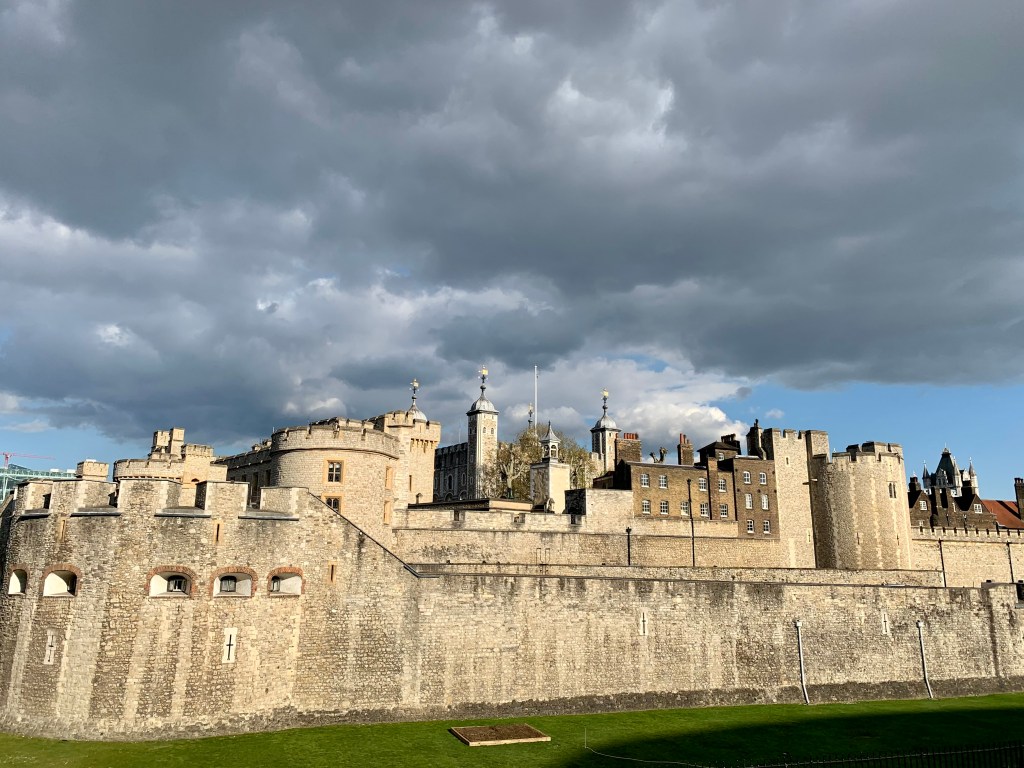
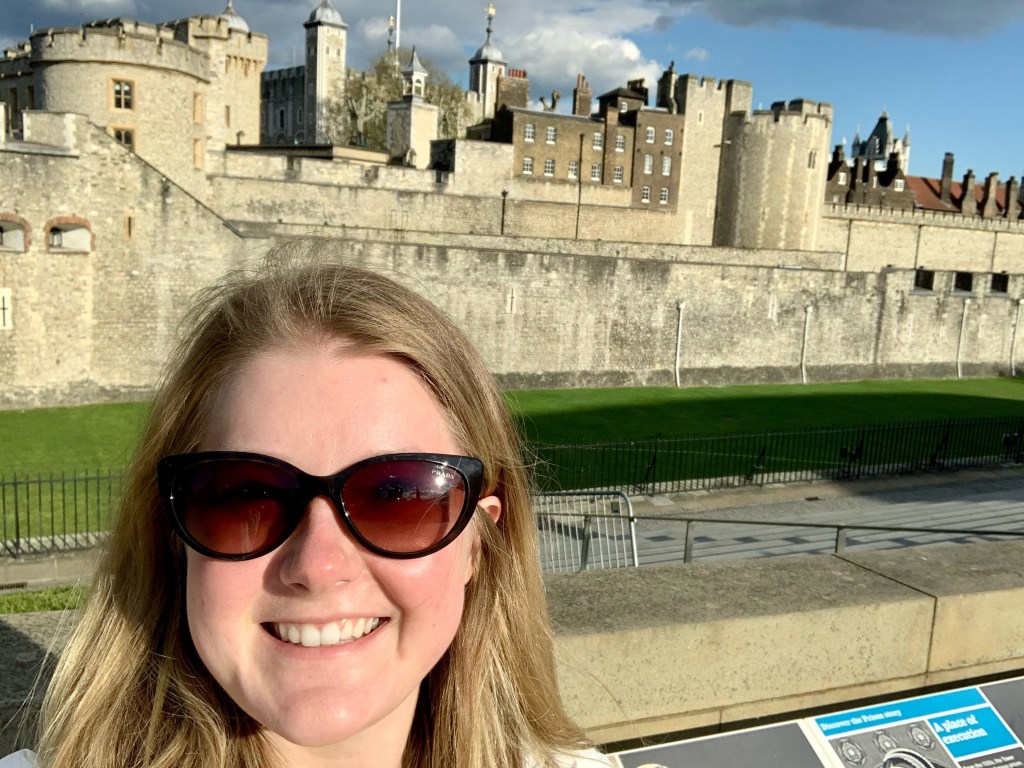
Built by William the Conqueror in the 1070s, the Tower of London has served a variety of purposes (from protecting the Crown Jewels to housing London’s first zoo). Since the Tower was closed on the day I visited, I am hoping to return to take a full tour!

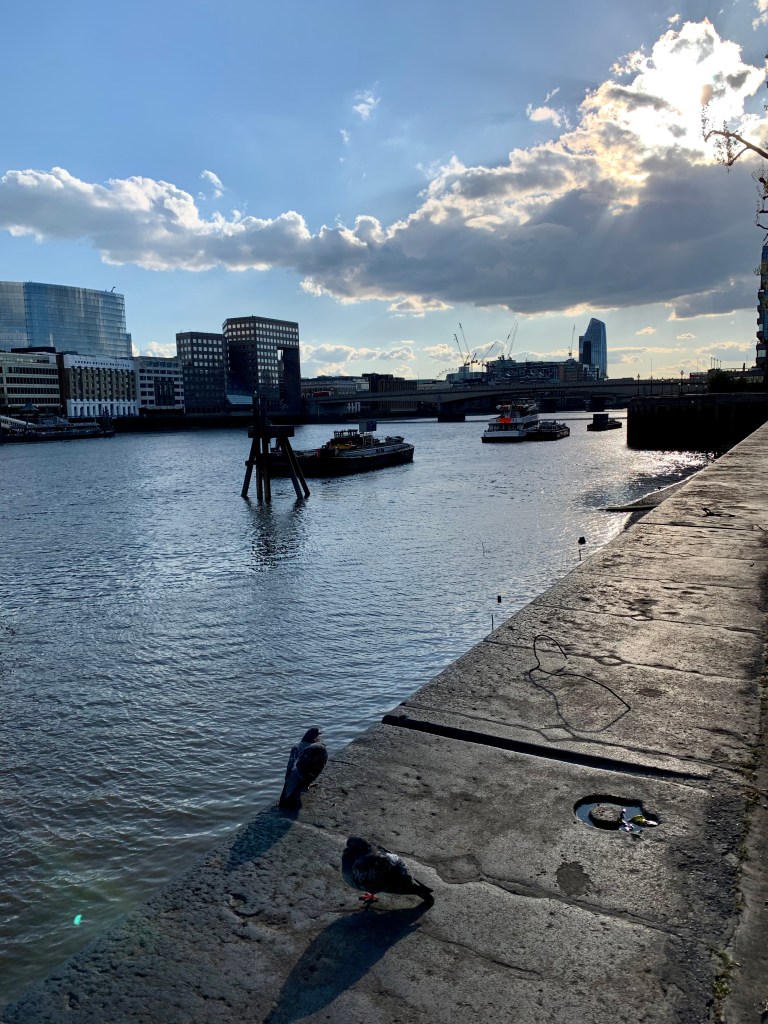
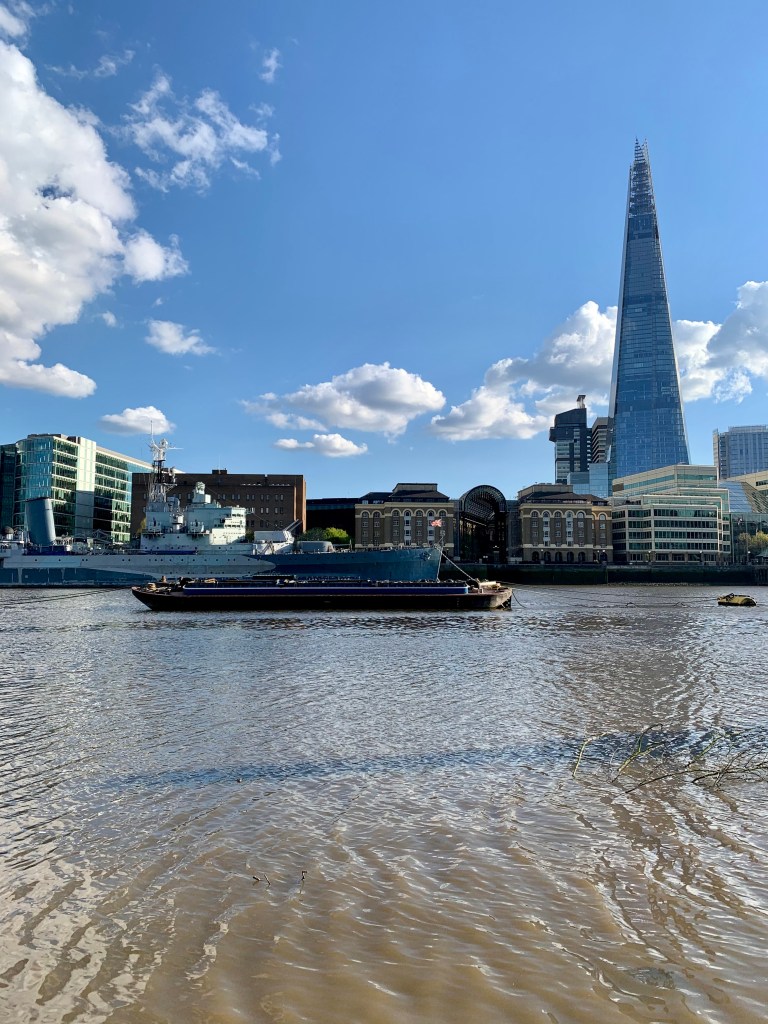
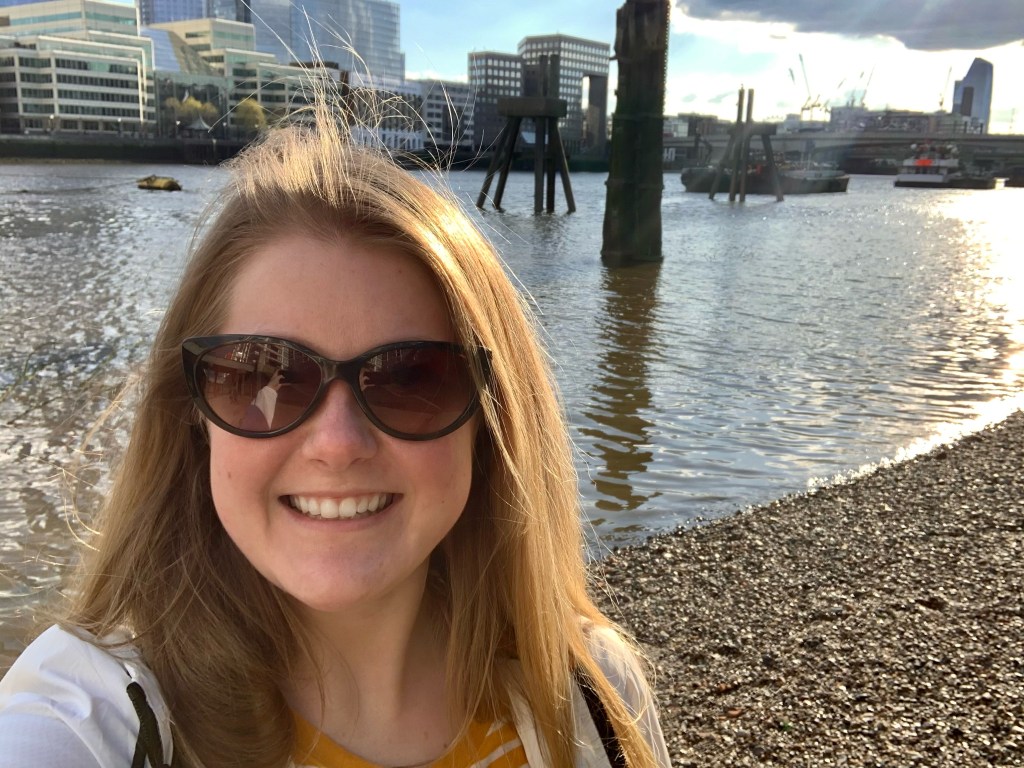
Spanning 215 miles, the Thames is England’s longest river. This Smithsonian Magazine article is an excellent read for anyone interested in the history of the Thames. (For example, did you know that Lewis Carroll first told the beginning of the story Alice in Wonderland while on a river boat trip on the Thames in 1862?) Of course, the story of the Thames would be incomplete without a chapter on its pollution (which some scientists worry will be exacerbated by the disposal of single-use plastic items during the COVID-19 pandemic).
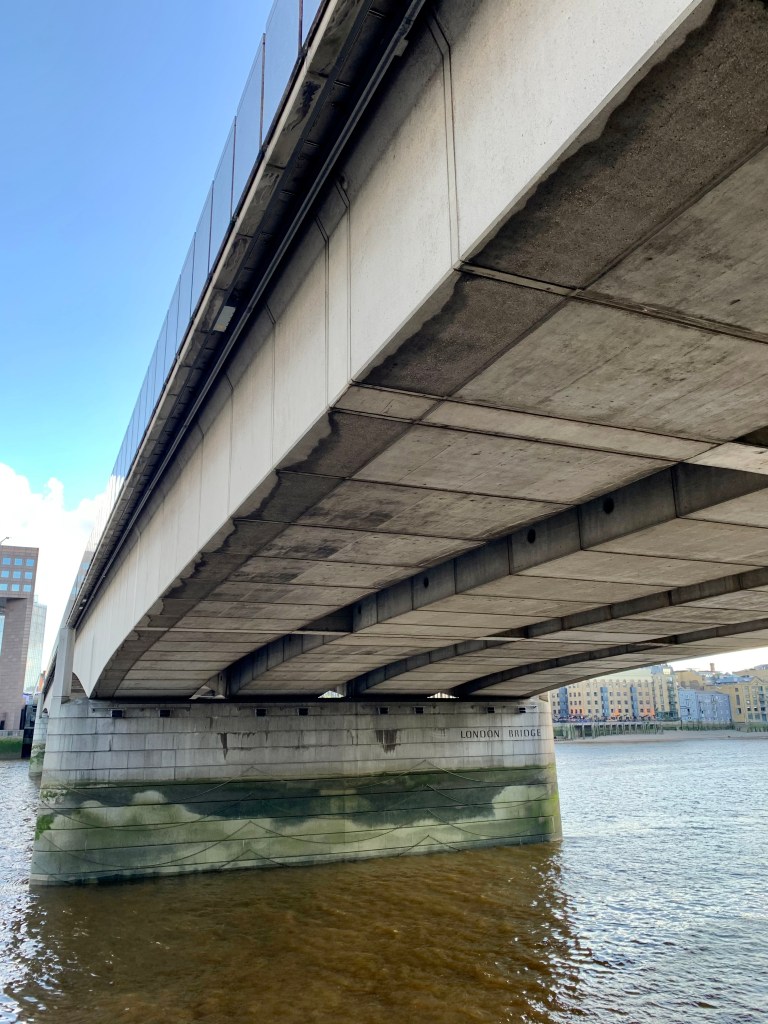
Like many others, my first introduction to the London Bridge was through the well-known nursery rhyme “London Bridge is Falling Down.” There have been several reincarnations of the London Bridge, including the “Old” London Bridge which was built in 1209 and served as the key crossing point of the Thames in London for over six hundred years. The “Old” London Bridge was dismantled after a replacement (or “New”) London Bridge was built in 1831. However, after surveys showed that this bridge was sinking an inch every eight years, it was dismantled and replaced by a bridge built to withstand modern traffic. (Interestingly enough, an American tycoon purchased the “New” London Bridge and moved it piece-by-piece to Arizona.) The modern London Bridge (which is featured in my picture above) was opened in 1973.
On my second trip to London, I saw the Marble Arch, Hyde Park, the Albert Memorial, Kensington Palace, the London Eye, and Big Ben.
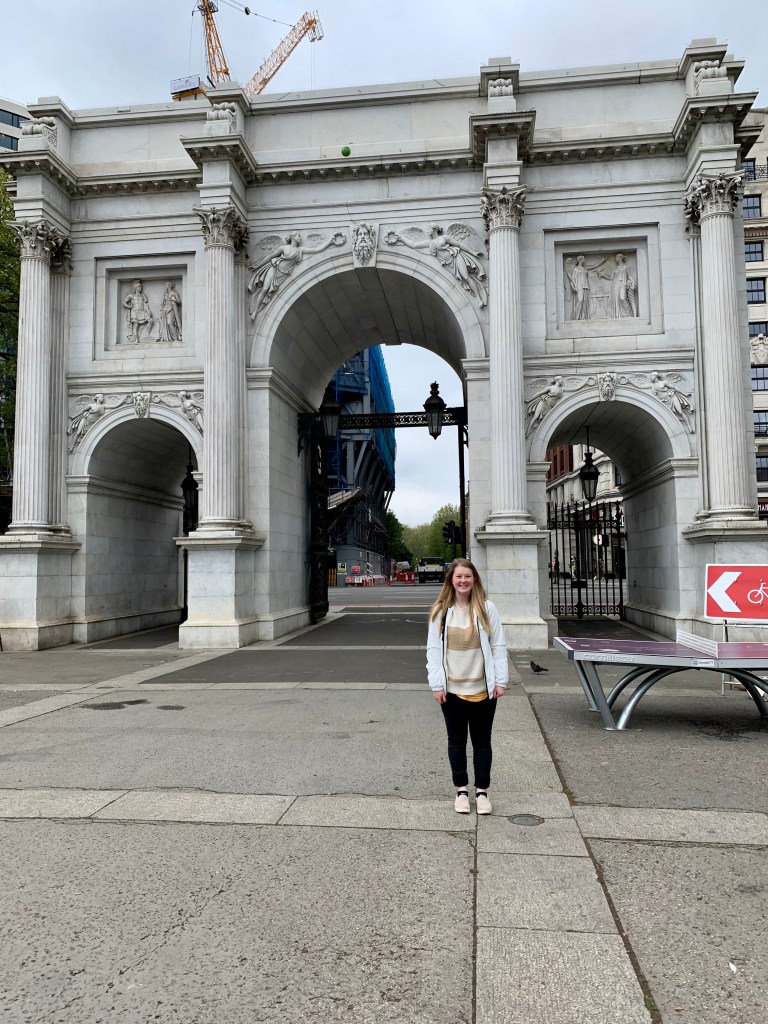
The Marble arch was designed by John Nash in 1825 as a ceremonial entrance to Buckingham Palace and a memorial to British triumphs during the Napoleonic Wars. Due to the expansion of Buckingham Palace, the arch was dismantled in 1850 and rebuilt at the corner of Hyde Park.

The Albert Memorial, which was built in 1872, commemorates the 1861 death of Prince Albert from typhoid. The memorial shows Prince Albert holding the catalog of the Great Exhibition (which he helped to organize).
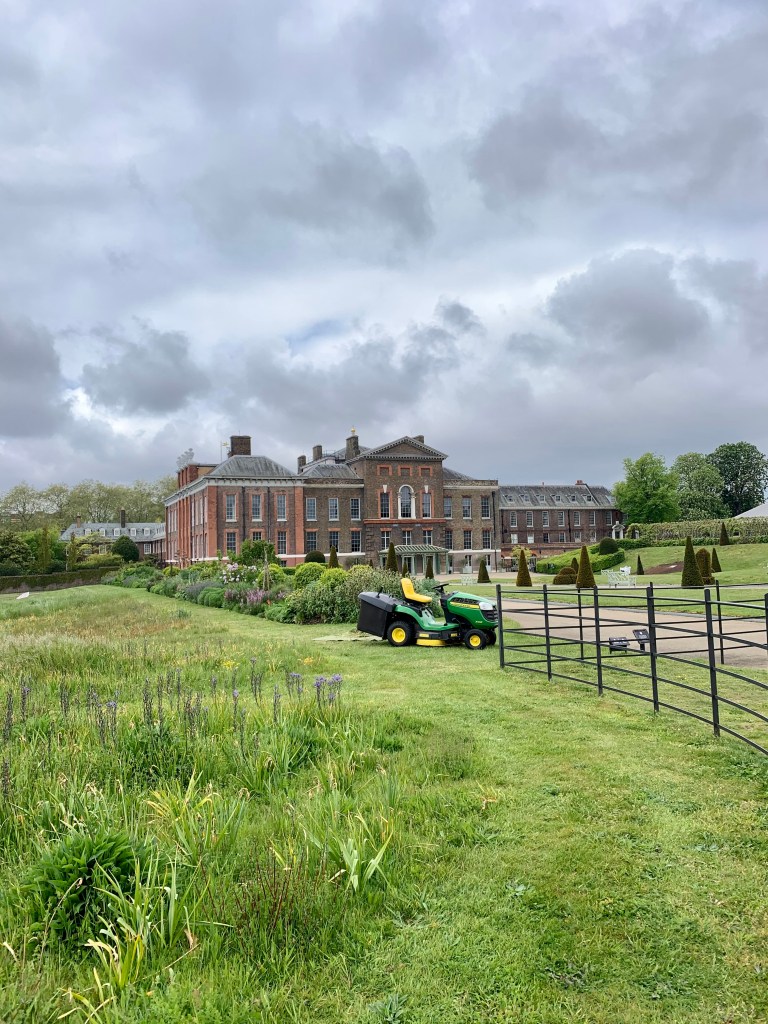
Kensington Palace is the official residence of the the Duke and Duchess of Cambridge and their children. It was also the childhood home of Queen Victoria. (Of course, the John Deere lawn mower parked out in front of the palace was something I had to photograph!)

The London Eye opened to the public in 2000 as a celebration of the new millennium. Even though the original plan was to dismantle this Ferris wheel after five years, it remains in operation to this day due to its popularity. The 32 “capsules” (as the cabins which carry passengers are called) represent the 32 boroughs of Greater London. Each capsule can carry 25 passengers. Although the London Eye was not in operation the day that I visited, I am hoping to go back again on a day when I can experience it for myself!
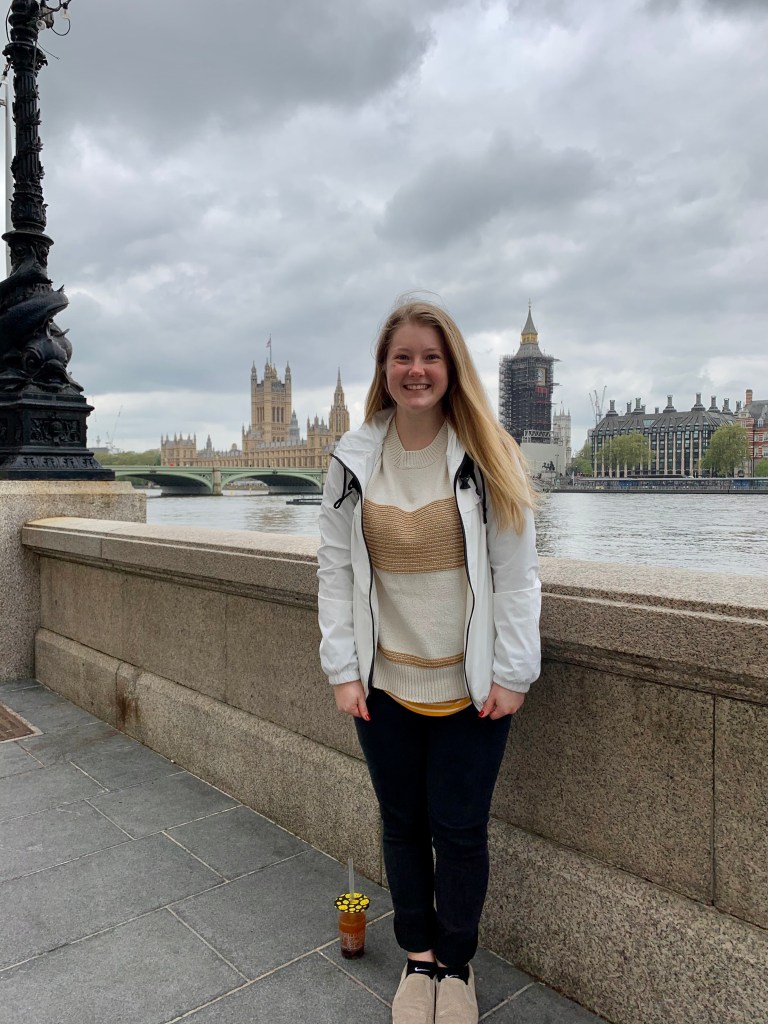
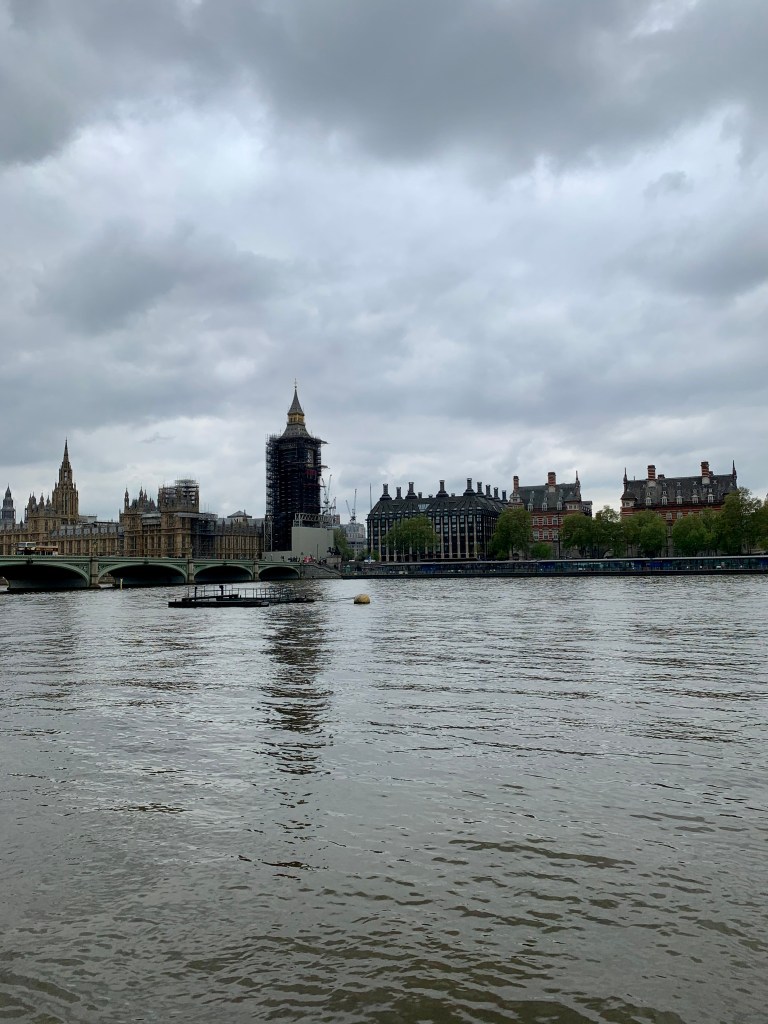
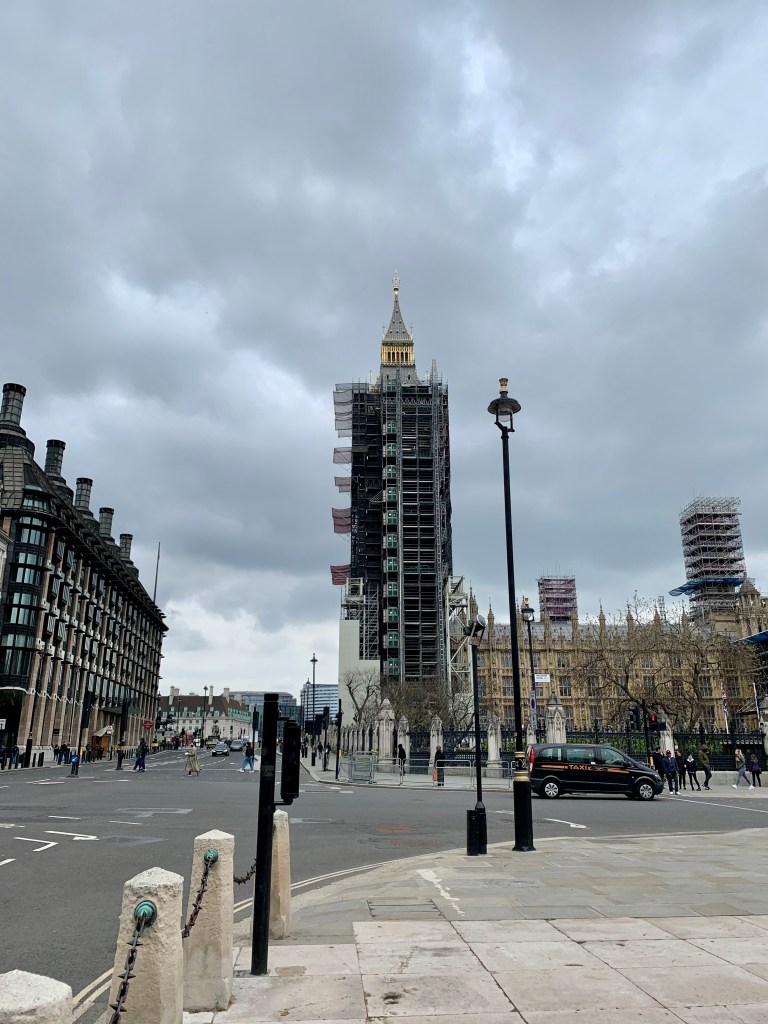
Although disguised by scaffolding, I was also able to see Big Ben on my second visit to London! The scaffolding is scheduled to be removed early next year after the end of a five-year renovation project. Prior to the 2017 start of this renovation project, the bells of Big Ben had been ringing for more than 160 years.
Finally, I was able to see Buckingham Palace on my third visit to London.

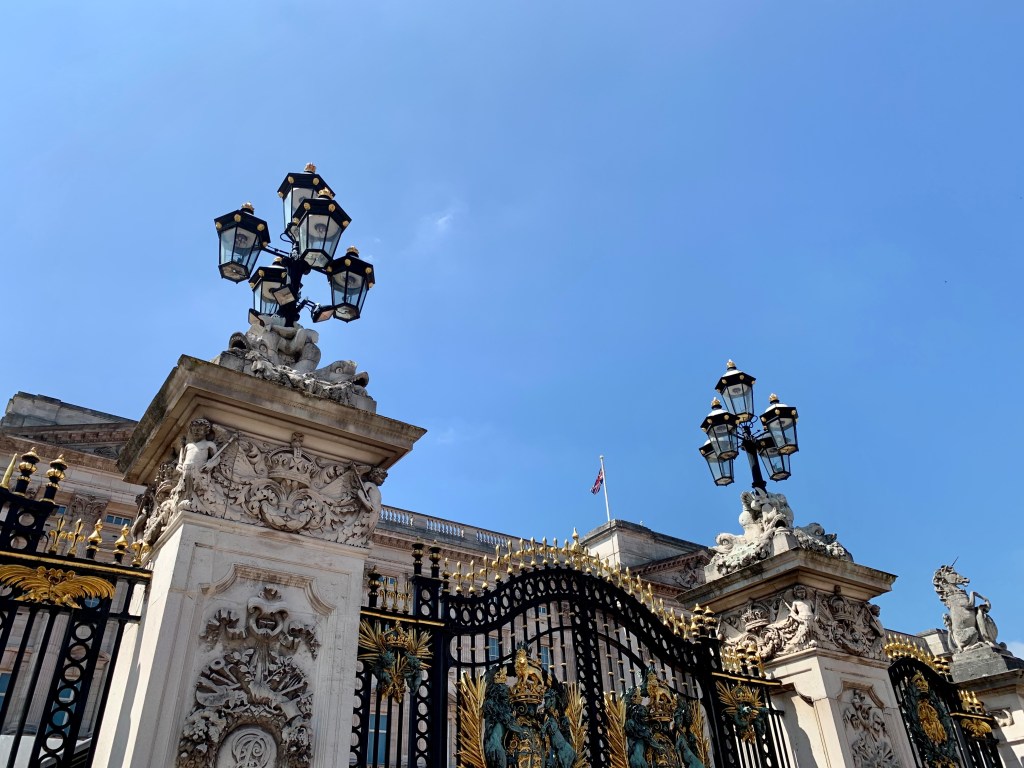
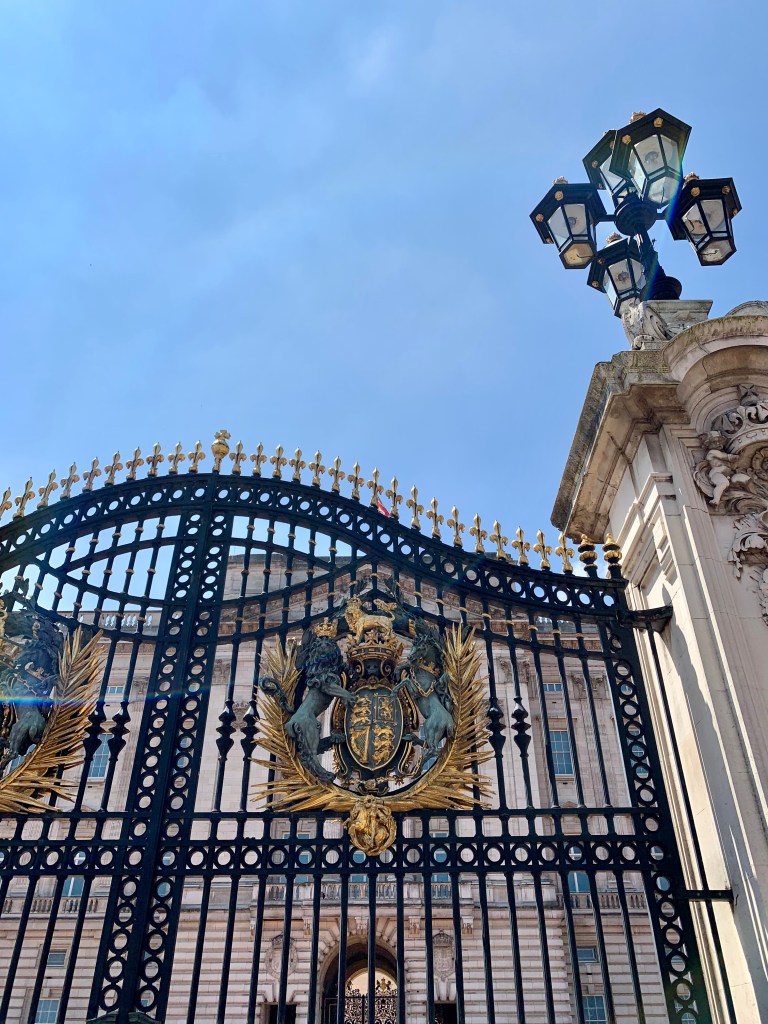
With 775 rooms, Buckingham Palace is the official London residence of the Queen. (And 78 of those rooms are bathrooms!)
READING
In addition to spending time in London, I also spent more time exploring the town of Reading during the month of May. It was during this exploration that I learned Reading is officially a town and not a city. This is due to Reading’s lack of a Royal Charter. With a population of 342,117, Reading is the largest town in the United Kingdom.
Some of my favorite spots in this town include Whiteknights Lake, Harris Garden, Reading Abbey, and the Maiwand Lion.
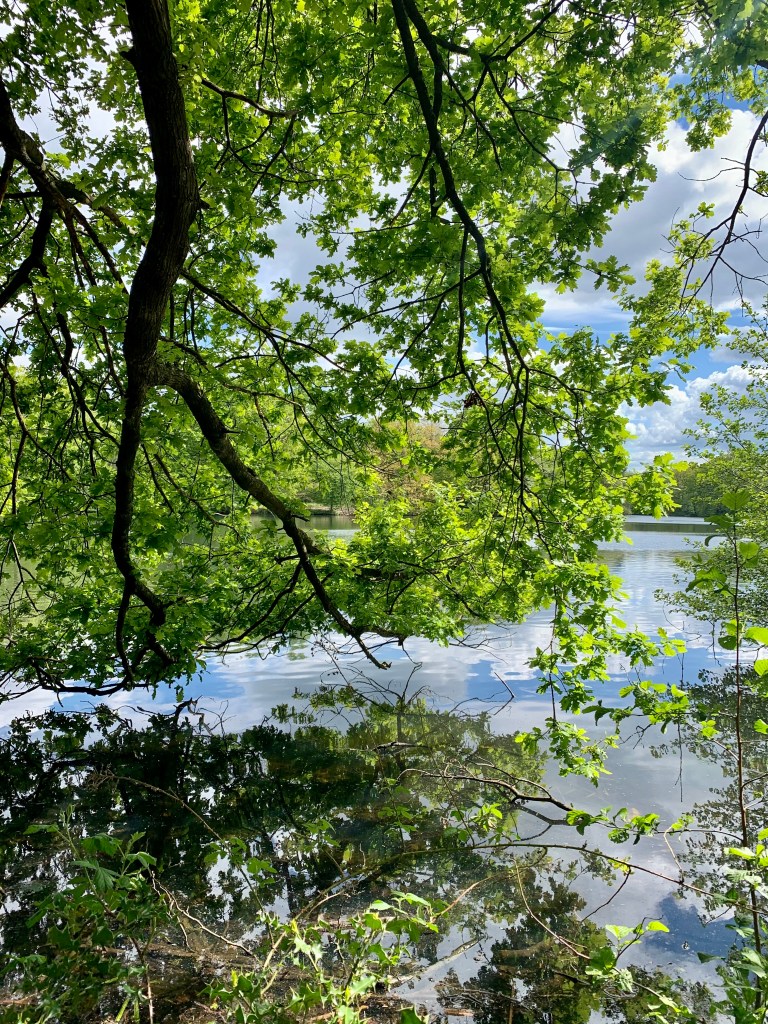
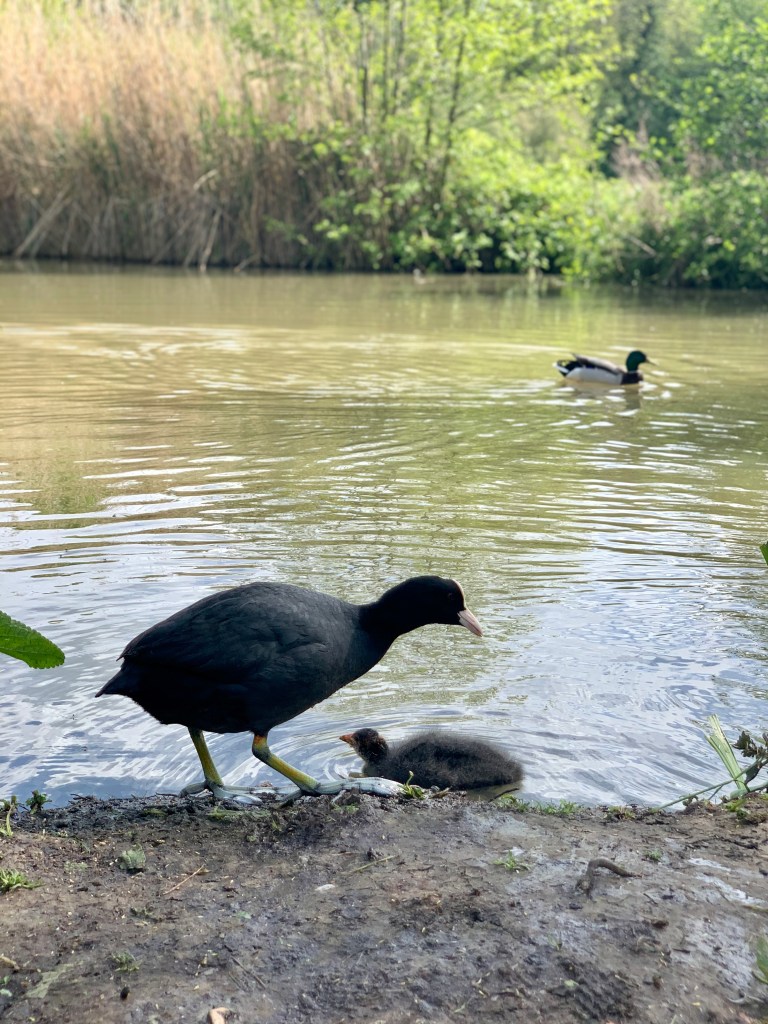

A mere fifteen minute walk from my accommodations, Whiteknights Lake is one of my favorite parts of the University of Reading campus. Even though I enjoyed walking around the lake last fall, I have to say that spring is the lake’s best season! I love being able to see all of the baby birds (especially the ones which I can’t see back home in Kansas).
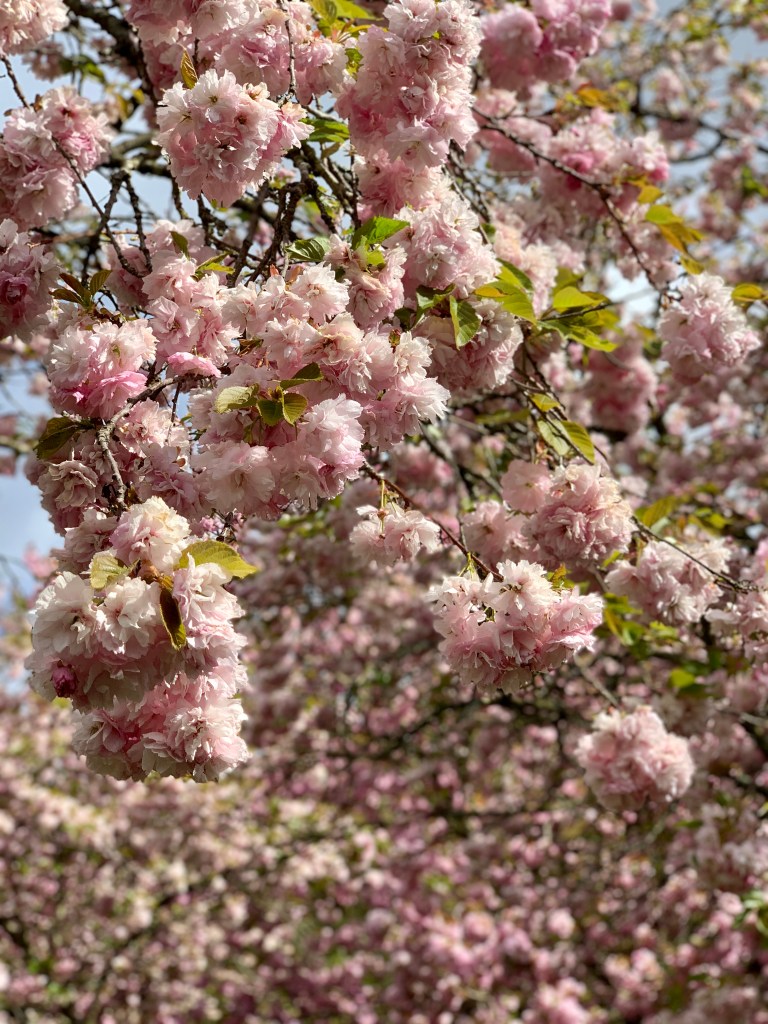
The spring is also arguably the best time to visit the Harris Garden, a botanic garden located on the University of Reading campus. My favorite part of the garden is the Cherry Bowl, which was planted in 1995 and is absolutely beautiful in the springtime!
Outside of the University of Reading campus, two additional spots which I have enjoyed visiting in Reading are the Reading Abbey and the Maiwand Lion.
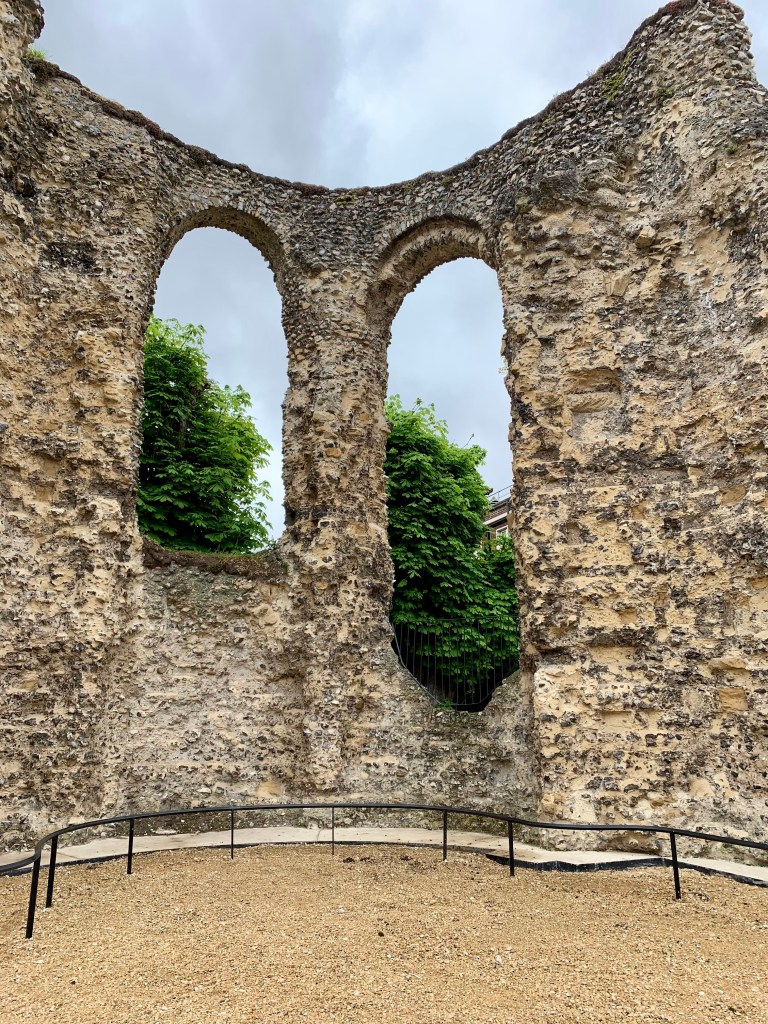
In medieval times, the Reading Abbey was one of the largest monasteries in Europe. The Abbey was officially opened in 1164. After serving as a place for monks to live and worship for over four centuries, the Abbey was closed in 1539 on the orders of King Henry VIII (who then took all of the Abbey’s valuable possessions). The Abbey was then converted into royal lodging, and remained a place for royals to stay until the start of the English Civil War. Today, visitors can view the recently renovated Abbey ruins.
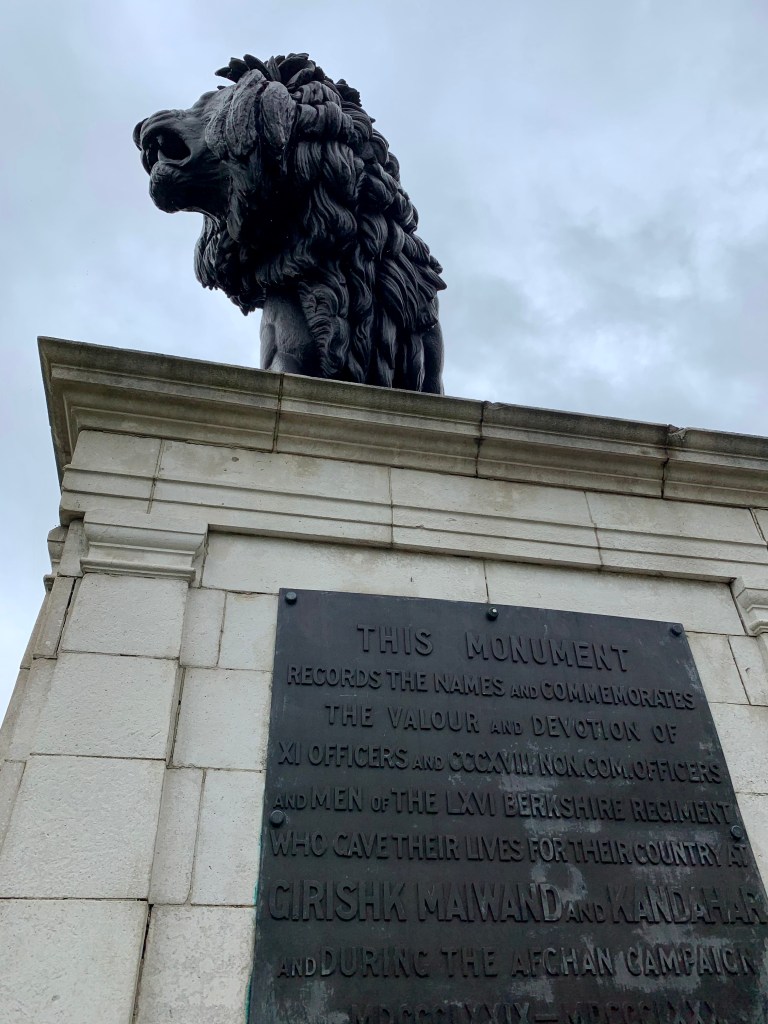
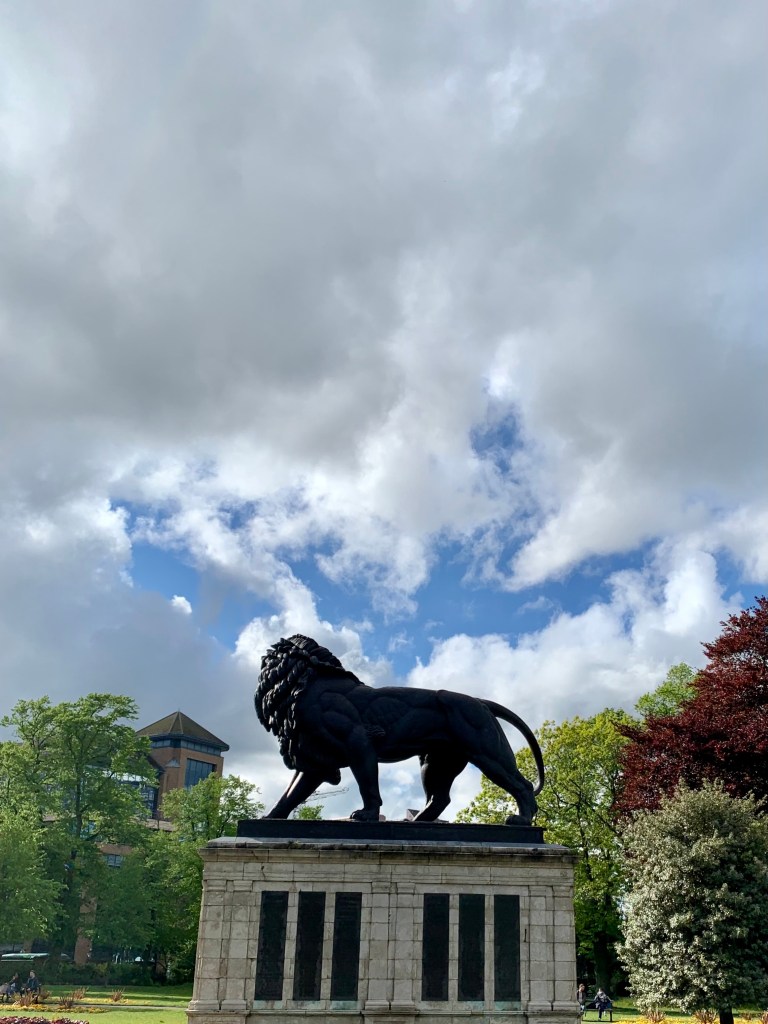
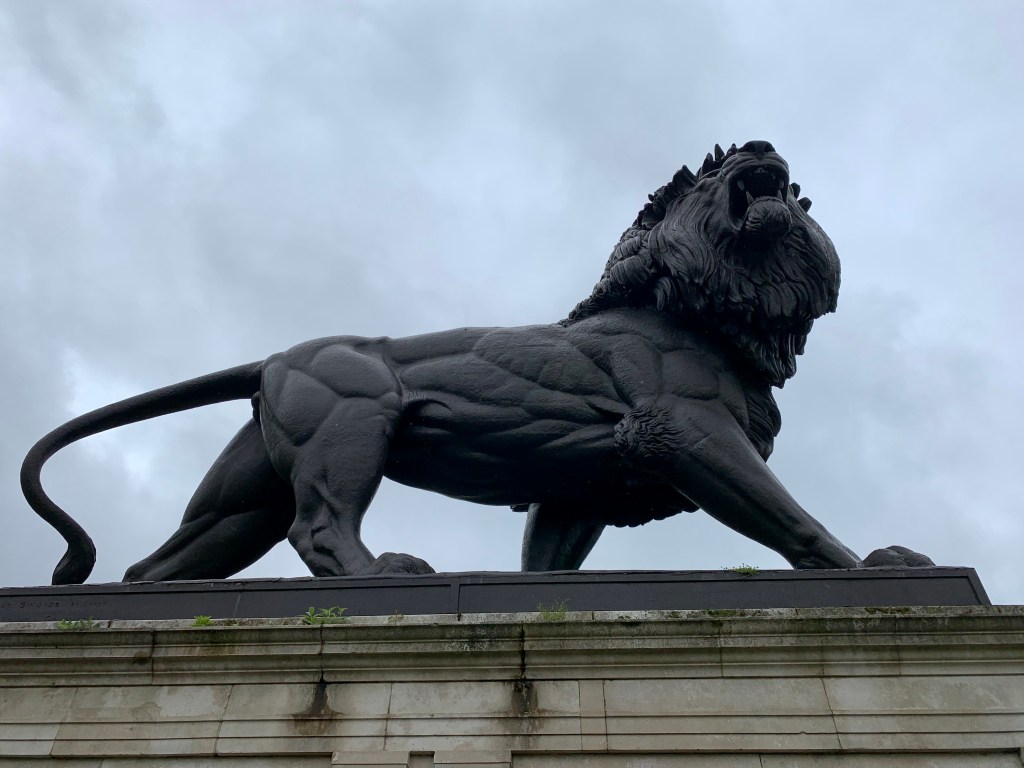
Located in the Forbury Gardens, the Maiwand Lion is named after a small village in Afghanistan where the Battle of Maiwand took place in 1880. During this battle, 328 men from the 66th Berkshire Regiment died. (In Arthur Conan Doyle’s A Study in Scarlet, Doctor Watson describes being shot at the Battle of Maiwand.) The Maiwand Lion memorial was unveiled in 1886. To sculpt the lion, George Blackall Simonds studied lions at the London Zoo and worked to portray a lion moving at full speed.
That sums up my travels in the month of May! As always, be sure to “follow” my blog if you want to receive email updates in your inbox when I publish new posts. I am planning on visiting the White Cliffs of Dover this weekend, so stay tuned for a post about my trip!

 Clara Kathleen
Love! Keep sharing your little tours with us 🙂
LikeLiked by 1 person
Will do! 😊
LikeLike